
Who was Maria Montessori?
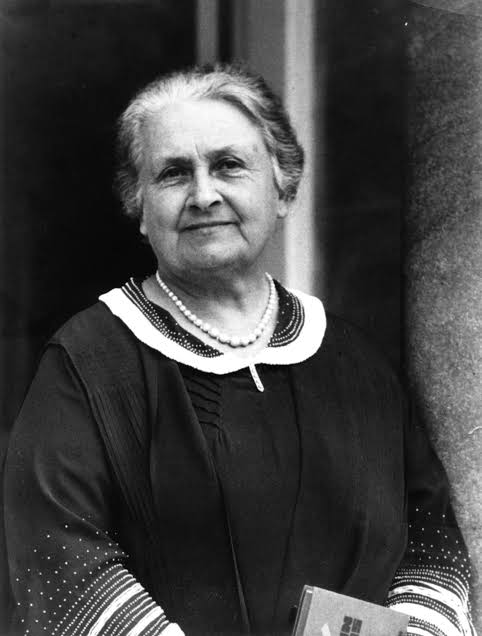
Montessori education derives its name from Maria Montessori, a woman, who in many ways, was ahead of her time. She was born in Chiaravalle, Italy, in 1870 and became the first female physician in Italy when she graduated from medical school in 1896. The clinical observations she made during her medical practice led her to analyzing how children learn, how they build themselves from what they find in their immediate environment.
She accepted a challenge in 1906: to educate 60 children of working parents in the San Lorenzo district of Rome. It was there that she founded the first Casa dei Bambini, or “Children’s House,” and developed what ultimately became the Montessori way of education. She saw the children’s almost effortless ability to absorb knowledge from their surroundings, as well as their tireless interest in manipulating materials. Every piece of equipment, every exercise, every lesson Dr. Montessori developed was based on what she observed children to do “naturally” by themselves and unassisted by adults.
Children teach themselves. This simple but profound truth inspired Montessori’s lifelong pursuit of educational reform. She tirelessly dedicated herself to furthering the self-creating process of the child.
In 1952, Maria Montessori died in Noordwijk, Holland, but her work continues. Today, there are close to 5,000 private and approximately 200 public Montessori schools in the United States alone, and Montessori schools exist on every continent except Antarctica.
Benefits of Montessori Education
Montessori education offers our children opportunities to develop their potential as they step out into the world as engaged, competent, responsible, and respectful citizens with an understanding and appreciation that learning is for life.
Each child is valued as a unique individual.
Beginning at an early age, Montessori students develop order, coordination, concentration, and independence.
Students are part of a close, caring community.
Montessori students enjoy freedom within limits.
Students are supported in becoming active seekers of knowledge.
Self-correction and self-assessment are an integral part of the Montessori classroom approach.
Montessori vs. Traditional Education:
Montessori
- Emphasis on: cognitive structures and social development
- Teacher has unobtrusive role in classroom activity; child is an active participant in learning
- Environment and method encourage internal self-discipline
- Instruction, both individual and group, adapts to each student’s learning style
- Mixed age groupings
- Children are encouraged to teach, collaborate, and help each other
- Child chooses own materials and work from interests and abilities
- Child formulates own concepts from self-teaching materials (in the prepared environment)
- Child works as long as she/he wishes on chosen project
- Child sets own learning pace to internalize information
- Child spots own errors through control of error or feedback from the material
- Learning is reinforced internally through the child’s own repetition of an activity and internal feelings of success (often referred to as ‘process over product’)
- Muti-sensory materials for physical exploration throughout the entire learning environment
- Organized program for learning care of self and environment (Examples include: preparation of food, mopping messy spills, feeding class animals, watering plants, etc.)
- Child can work where she/he is comfortable, moves around and talks at will (yet disturbs not the work of others); group work is voluntary and negotiable
- Organized program for parents to understand the Montessori philosophy and participate in the learning process
Traditional
- Emphasis on: rote knowledge and social development
- Teacher has dominant, active role in classroom activity; child is a passive participant in learning
- Teacher acts as primary enforcer of external discipline
- Instruction, both individual and group, conforms to the adult’s teaching style
- Same age groupings
- Most teaching is done by teacher and collaboration is discouraged
- Curriculum structured for child with little regard for child’s interests
- Child is guided and taught to concepts by teacher through assigned daily lessons
- Child generally given specific time limit or time frame for work
- Instruction pace usually set by group norm or teacher
- If work is corrected, errors usually pointed out by teacher (as self-correction is typically absent)
- Learning is reinforced externally by rote repetition and rewards and discouragements or better known as behavior modification
- Fewer materials for sensory development and concrete manipulation
- Less emphasis on self-care instruction and classroom maintenance leading to an environment maintained entirely by the adult
- Child usually assigned own chair; encouraged to sit still and listen during group sessions which are typically not voluntary (group work and interaction is teacher controlled)
- Voluntary parent involvement, often only as fundraisers, not participants in understanding and learning process
The Prepared Environment
Given the freedom and support to question, to probe deeply, and to make connections, Montessori students become confident, enthusiastic, self-directed learners. They are able to think critically, work collaboratively, and act boldly—a skill set for the 21st century.
Mixed Ages
A multi-age setting enhances learning; children learn from one another, and they learn because of each other. Younger children get a chance to look ahead and see what is coming next by watching their older classmates work. Older children have the opportunity to reinforce their knowledge by sharing it with their younger classmates. Younger children emulate older children, and older children reinforce their knowledge by “teaching” the younger children.
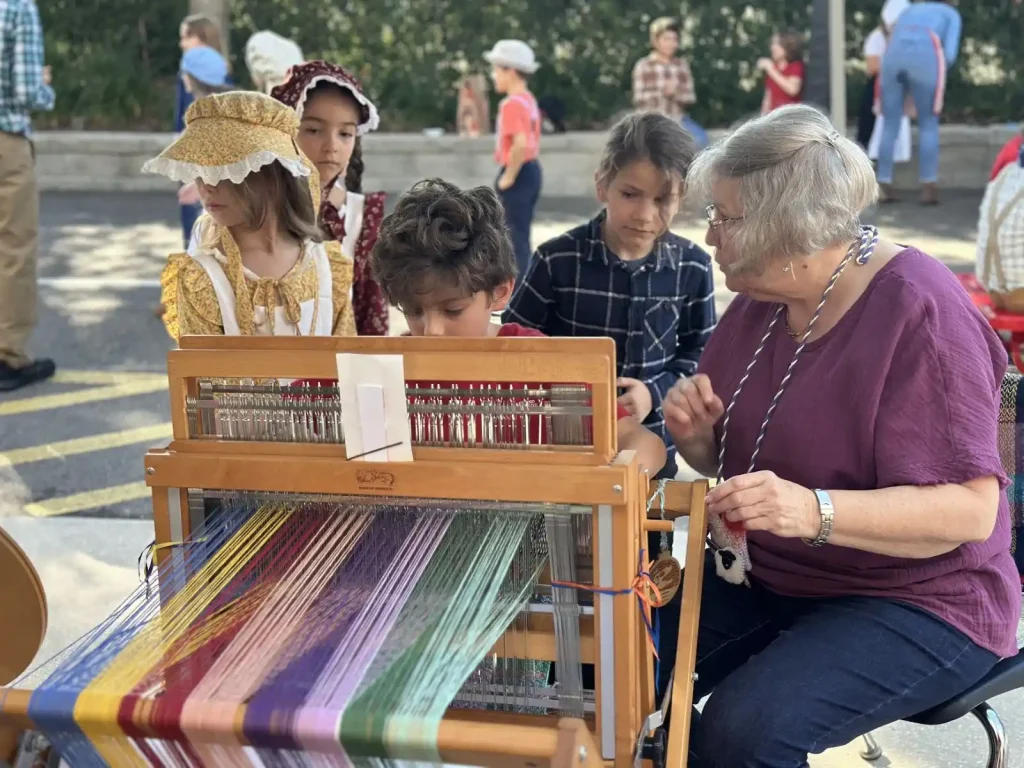
A multi-age setting, whether it be preschool or elementary, provides children with opportunities for broad social development. The students’ constant interaction with each other teaches them how to get along with children of different ages and abilities, to respect each other’s work and work space, and to treat each other with courtesy. The children take an active role in maintaining their classroom, and it becomes a thriving community where everyone is treated with respect and dignity.
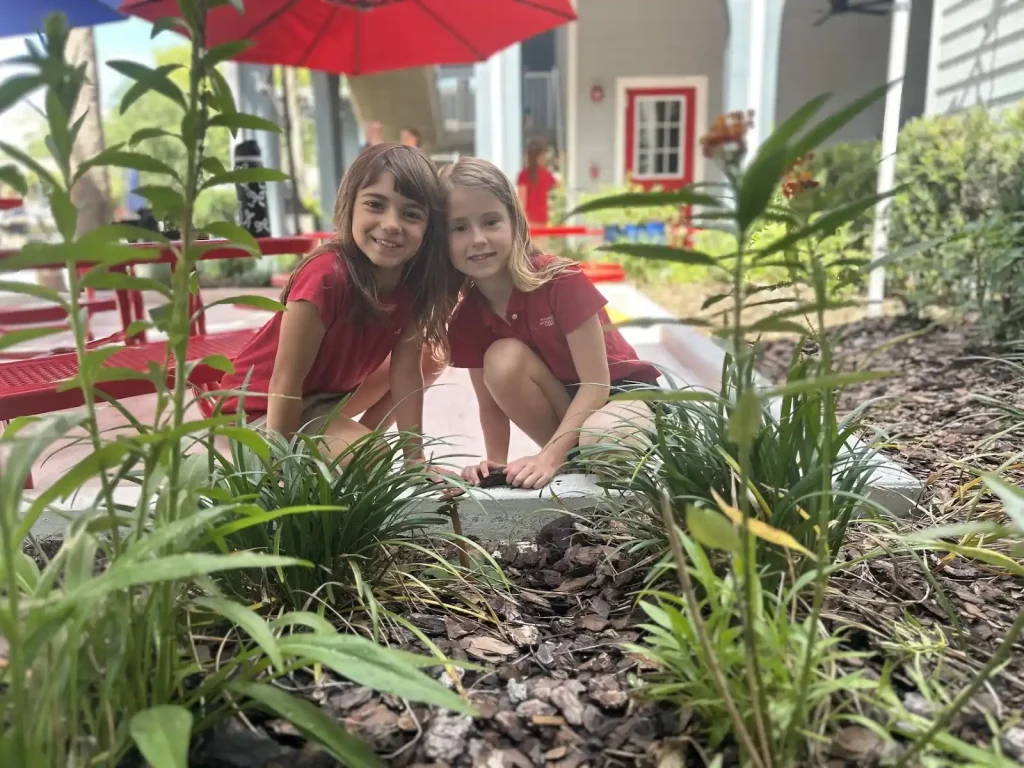
Self-confidence develops and children are given the opportunity for even greater leadership roles. Relationships and their complexities are supported by alert and sensitive adults who are trained to observe and enhance social interaction, not to repress it.
Freedom of Movement and Atmosphere
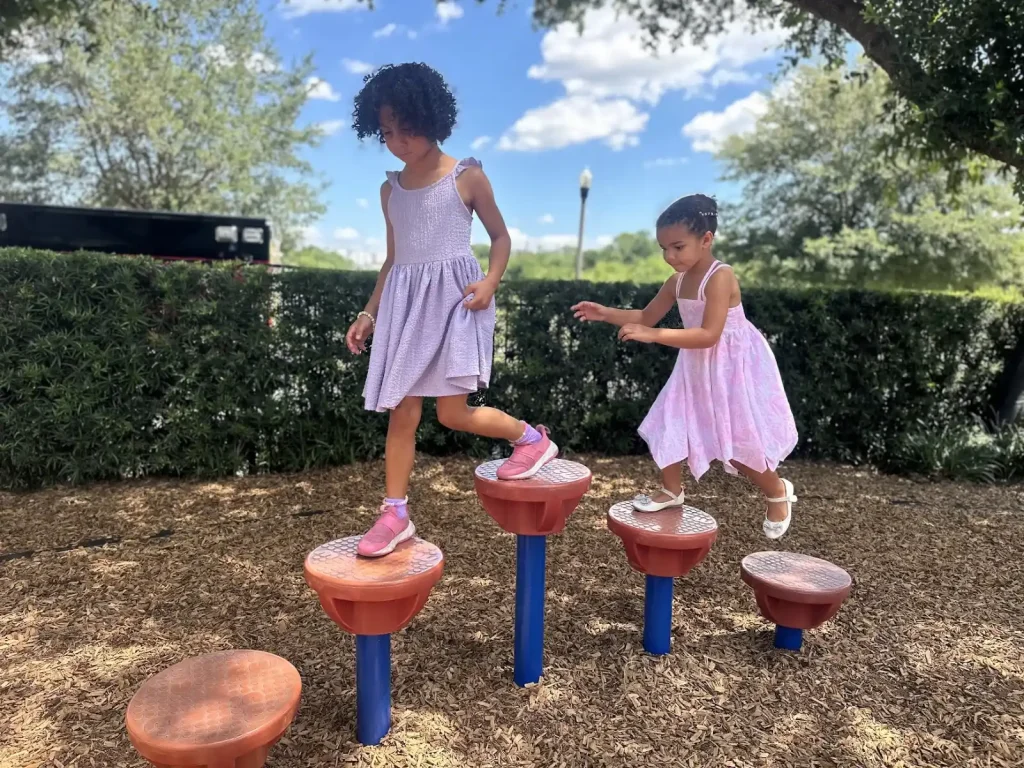
A child’s natural inclination is not to sit at a desk all day. For this reason, a Montessori environment allows for a variety of activity as well as a great deal of movement. Much of the work is done individually, but children often enjoy working on an activity with friends in small groups or on a whole class project.
The Montessori prepared environment respects and protects the child’s rhythm of life. It is a calm, ordered space constructed to meet her needs and match her scale of activity. Here, the child experiences a blend of freedom which goes hand in hand with self-discipline.
Fostering a Peaceful Community
The Preschool Prepared Environment and Materials
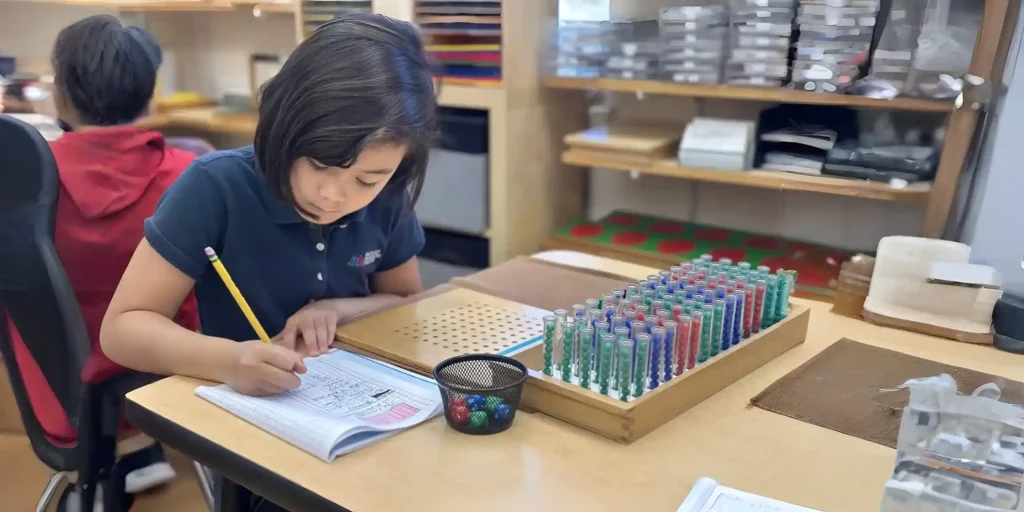
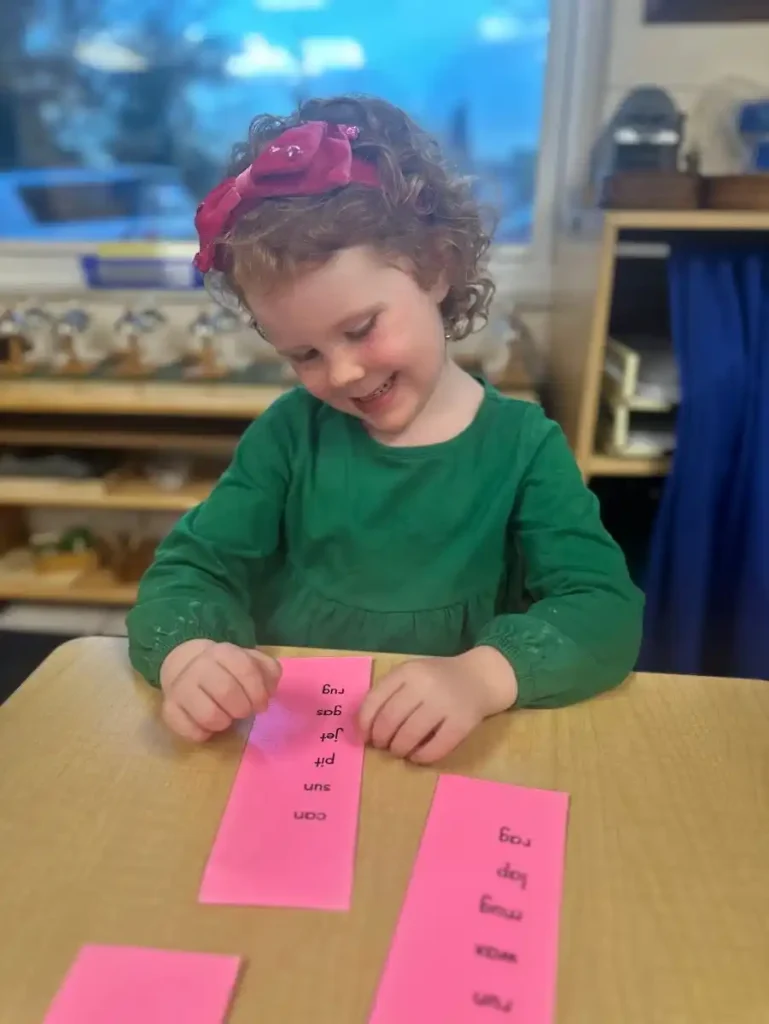
The Montessori “prepared environment” of the preschool classroom is a “living room” for children, which is designed to facilitate maximum independent learning and exploration by each child. The classroom space is divided into five distinct areas: Practical Life, Sensorial, Mathematics, Language, and Culture. No subject is taught in isolation; the Montessori preschool curriculum is interdisciplinary and interactive.
Each area’s materials are arranged invitingly on low , open shelves. Each child may choose his work from the shelves so long as a lesson has been presented to him. He may work for as long as the material holds his interest. When the child is finished with the material, he returns it to the shelf from which it came.
The materials themselves invite activity and are the focal point of the classroom. The walls are kept clear of distracting pictures.
The Elementary Prepared Environment and Materials
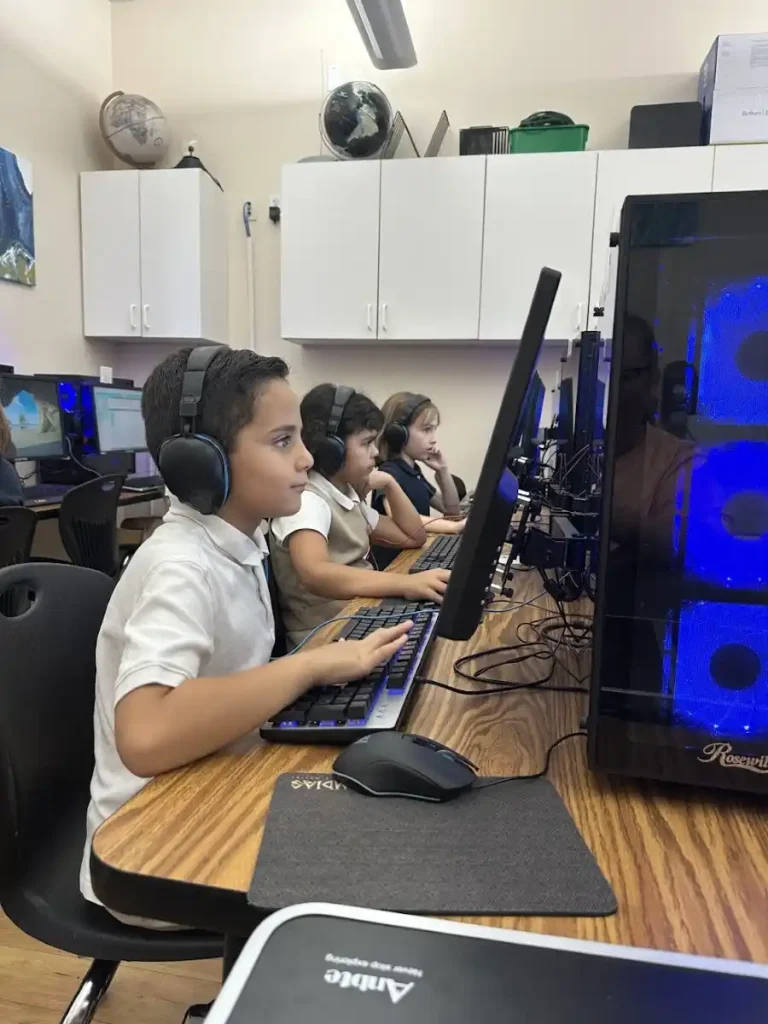
The Montessori elementary environment balances the child’s developing imagination and powers of abstraction with down-to-earth, concrete, hands-on materials. The classroom is still divided by curriculum areas, but again, the subjects are not taught in isolation. Lessons are placed on shelves for individual children to use by themselves or with a small group of classmates, but hands-on materials will become of less importance, particularly at the higher elementary levels, when the child will begin to work more abstractly. Each lesson’s material has its structured sequences which have been designed to lead the child to discovery and understanding of the physical world.
Montessori provides diverse and creative passages to abstraction. Mathematics, for instance, is presented through three-dimensional manipulative materials, each providing a concrete way to experience an abstract concept. Likewise, the grammar materials use symbols and visual patterns to help the child discover parts of speech and analyze the structure, style, and logic of sentences. These exercises refine reading and writing skills and lay the foundation for foreign language study. The prepared environment provides the “keys” of each discipline in a manner that meets the elementary child’s needs for inspiration as well as order.
Is Montessori Right for Your Child?
Research has shown that the best predictor of future success is a positive self-esteem. Montessori help kids develop positive self-images through activities self directed and non-competitive, giving your kid the possibly best start for his future.
Learns to be adaptable
- Our learning environments have multi-sensorial materials for exploration
- Our learning environments are mixed aged groups
- Our program includes learning care of self and environment (Ex: preparation of food, mopping messy spills, feeding class animals, watering plants, etc.)
Work individually and in teams
- Group work is voluntary and negotiable
Learns to solve problems
- Our emphasis is in cognitive structures
- We believe in “process over product” where learning is reinforced internally through the kids own repetition of an activity and internal feelings of success
- Student formulates new concepts by self-teaching materials (in the prepared environment)
- Our learning environments have multi-sensorial materials for exploration
- Student is taught how to spot own errors through control of error or feedback
Learns to manage time efficiently
- Student has active participation in learning by deciding what he wants to work on.
- Student manages his own time to complete projects
Learns good communication skills
- We encourage kids to teach and collaborate
- Student can talk at will (without disturbing the work of others)
Frequently Asked Questions
I have seen only Montessori preschools. Are there Montessori schools for older children as well?
Dr. Montessori first developed her educational approach while working with a preschool population. She gradually extended her approach to children and youth of all ages. Today, some Montessori schools provide all levels of learning, from infant & toddler though the secondary (high school) level. Others offer only certain levels.
The benefits of Montessori—the emphasis on independent learning, for example, and the warm, supportive community—continue to be important at each stage of development as children grow into lifelong learners and responsible citizens of the world.
How many students are typically in a Montessori class?
Unlike some private schools, which strive for very small classes, Montessori values the lessons of community when the size of the class is somewhat larger.
Montessori classes for children above the infant & toddler level might include 20–30 students whose ages span 3 years. All members of the community benefit from this set-up. Older students are proud to act as role models; younger ones feel supported and gain confidence about the challenges ahead. Classes for infants & toddlers are smaller, with typically 10–15 children.
How can children learn if they're free to do whatever they want?
Dr. Montessori observed that children are more motivated to learn when working on something of their own choosing. A Montessori student may choose his focus of learning on any given day, but his decision is limited by the materials and activities—in each area of the curriculum—that his teacher has prepared and presented to him.
Beginning at the elementary level, students typically set learning goals and create personal work plans under their teacher’s guidance.
Why are Montessori schools all work and no play?
Dr. Montessori realized that children’s play is their work—their effort to master their own bodies and environment—and out of respect she used the term “work” to describe all their classroom activities. Montessori students work hard, but they don’t experience it as drudgery; rather, it’s an expression of their natural curiosity and desire to learn.
If children work at their own pace, don't they fall behind?
Although students are free to work at their own pace, they’re not going it alone. The Montessori teacher closely observes each child and provides materials and activities that advance his learning by building on skills and knowledge already gained. This gentle guidance helps him master the challenge at hand—and protects him from moving on before he’s ready, which is what actually causes children to “fall behind.”
Do Montessori teachers follow a curriculum?
Montessori schools teach the same basic skills as traditional schools, and offer a rigorous academic program. Most of the subject areas are familiar—such as math, science, history, geography, and language—but they are presented through an integrated approach that brings separate strands of the curriculum together.
While studying a map of Africa, for example, students may explore the art, history, and inventions of several African nations. This may lead them to examine ancient Egypt, including hieroglyphs and their place in the history of writing. The study of the pyramids, of course, is a natural bridge to geometry.
This approach to curriculum shows the interrelatedness of all things. It also allows students to become thoroughly immersed in a topic—and to give their curiosity full rein.
Is it true that Montessori students have the same teacher for all subjects rather than work with “specialists” in different curricular areas?
Montessori teachers are educated as “generalists,” qualified to teach all sections of the curriculum. But many schools choose to also employ specialists in certain subjects, including art, music, foreign language, physical education, and science.
Why don't Montessori teachers give grades?
Grades, like other external rewards, have little lasting effect on a child’s efforts or achievements. The Montessori approach nurtures the motivation that comes from within, kindling the child’s natural desire to learn.
A self-motivated learner also learns to be self-sufficient, without needing reinforcement from outside. In the classroom, of course, the teacher is always available to provide students with guidance and support.
Although most Montessori teachers don’t assign grades, they closely observe each student’s progress and readiness to advance to new lessons. Most schools hold family conferences a few times a year so parents may see their child’s work and hear the teacher’s assessment—and perhaps even their child’s self-assessment.
Do Montessori students take standardized tests?
Public Montessori schools are mandated to administer the same standardized tests as other public schools.
Some private Montessori schools also administer standardized exams, particularly if they will be required by schools into which their students may transition. Other schools choose not to administer these tests.
Can Montessori accommodate gifted children? What about children with other special learning needs?
An advantage of the Montessori approach—including multi-age classrooms with students of varying abilities and interests—is that it allows each child to work at her own pace. Students whose strengths and interests propel them to higher levels of learning can find intellectual challenge without being separated from their peers. The same is true for students who may need extra guidance and support: each can progress through the curriculum at his own comfortable pace, without feeling pressure to “catch up.”
We might note that from a Montessori perspective, every child is considered gifted, each in her own way. For every child has his own unique strengths—it is all a matter of degree.
Are Montessori schools expensive?
Private Montessori schools are independently owned and operated, and each sets its own business practices, including the cost of tuition. Typically, tuition fees vary from region to region and from school to school.
Some private schools offer scholarships for families in need of assistance, and many offer reduced tuition when parents enroll more than one child.
There are also more than 400 public Montessori schools in the United States. These include charter schools, some of which enroll students through a random lottery process. Like other public schools, charter schools are tuition-free.
How well do Montessori students do compared to students in non-Montessori schools?
There is a small but growing body of well-designed research comparing Montessori students to those in traditional schools. These suggest that in academic subjects, Montessori students perform as well as or better than their non-Montessori peers.
In one study, for example, children who had attended Montessori schools at the preschool and elementary levels earned higher scores in high school on standardized math and science tests. Another study found that the essays of 12-year-old Montessori students were more creative and used more complex sentence structures than those produced by the non-Montessori group.
The research also shows Montessori students to have greater social and behavioral skills. They demonstrate a greater sense of fairness and justice, for example, and are more likely to choose positive responses for dealing with social dilemmas.
By less stringent measures, too, Montessori students seem to do quite well. Most Montessori schools report that their students are typically accepted into the high schools and colleges of their choice. And many successful grads cite their years at Montessori when reflecting on important influences in their life.